What is brand identity, really? Every market has two kinds of businesses. The ones you recognize in an instant, and the ones you forget by tomorrow. The product can be identical. The prices can match. What separates them is rarely what they sell. It is how they present themselves, and whether that presentation sticks in anyone’s mind.
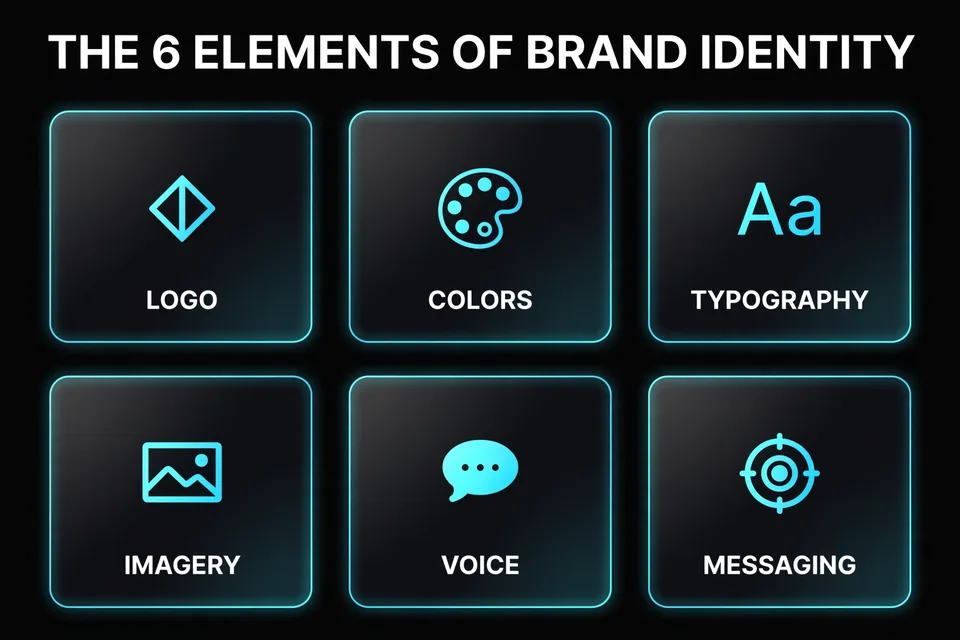
Brand identity is the complete set of visual and verbal elements a business designs to represent itself: the logo, color palette, typography, imagery, tone of voice, and messaging. Together they decide how a business looks, sounds, and feels everywhere a customer encounters it.
That is the one-paragraph answer to what is brand identity. Everything below is about building one that actually works.
Here is the distinction that makes everything else click. Your brand is what people think of you. Your brand identity is what you do about it.
Key takeaways
- Brand identity is everything you design and control about how your business shows up. Your brand is how people perceive you.
- A logo is one element, not the identity. The identity is the full system underneath it.
- Recognition compounds through consistency. Every matching encounter builds it. Every mismatch resets it.
- Strong identity buys trust, recall, and pricing power. Weak identity leaves you competing on price.
The real definition, minus the dictionary
Cambridge defines brand identity as the set of qualities people connect with a company or a product sold under a particular name, the things that make it different from competitors. Accurate, and completely bloodless.
The practical version: brand identity is the deliberate part of your reputation. Your reputation forms whether you manage it or not. It builds from every interaction, every touchpoint, every impression. Identity is the part you design in advance. What people see first. What they remember. What they feel before reading a single word.
Three terms get tangled here, so let us separate them cleanly. Branding is the verb, the ongoing work of building and maintaining all of this. Brand identity is the noun, the tangible system that work produces. Brand is the result, the perception living in other people’s heads. You do not own your brand. You own your identity, and you aim it at the brand you want. For the reference shelf, Investopedia’s brand identity guide covers the same framework from the strategy angle.
Your logo is not your brand identity
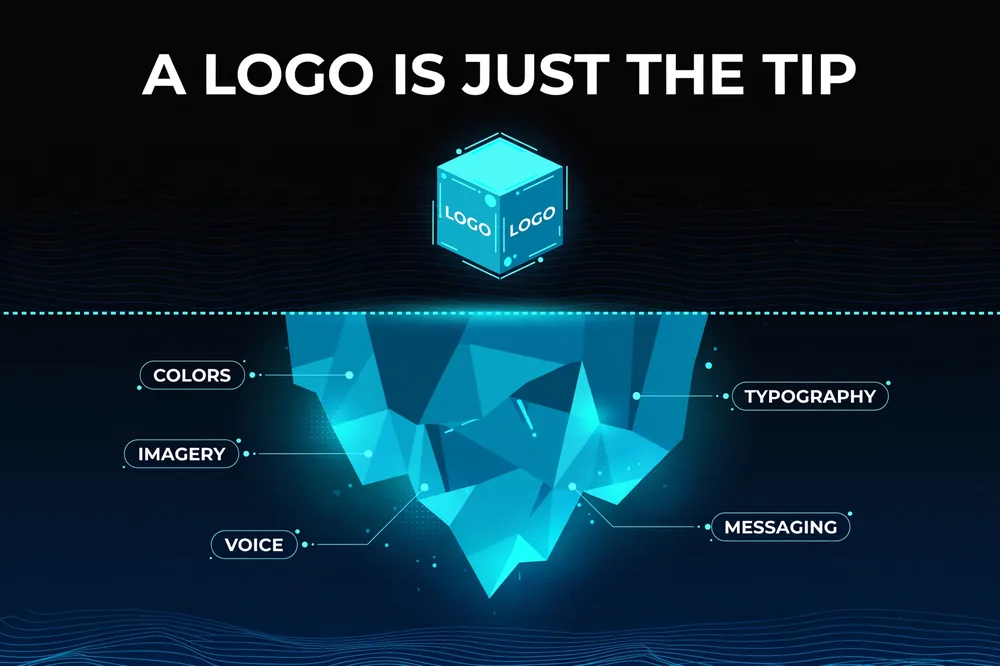
This is the most expensive misunderstanding in branding. A business commissions a logo, receives a logo, and concludes it now has a brand identity. It has a mark. That is one element out of six.
The logo is the tip of the iceberg, the part people point at. Below the surface sits everything that gives the mark meaning. The colors customers associate with you. The typography that sets tone before a word is read. The photography style. The way you write. The values you repeat until the market believes you. A logo without that system is decoration. The system without a remarkable logo can still win. The logo is the least load bearing part of the structure, which is precisely backwards from how most businesses budget for it.
The six elements of a brand identity
Strip any strong brand identity down and you find the same six components, whether the company is a startup or a household name. If the definition felt abstract, this is where what is brand identity becomes concrete.
1. Logo. The anchor mark. Distinctive, legible at any size, appropriate for the industry. That is the entire job description.
2. Color palette. Color is the fastest recognition trigger you own. One or two primary colors, a few supporting tones, applied relentlessly. When customers recognize you from a color alone, the palette is earning its keep.
3. Typography. Fonts set tone before words set meaning. Most identities define one heading face and one body face, then refuse to deviate.
4. Imagery. Photography and illustration style. This is where small businesses quietly fall apart, using a different visual style on every channel until nothing feels connected.
5. Voice and tone. How you write and speak. Formal or playful, blunt or warm. Your voice should be recognizable with the logo covered up.
6. Messaging and values. What you stand for and the story you repeat. The strategic layer the other five exist to express.
Remove one and the identity wobbles. Remove three and you do not have an identity at all, just a collection of design decisions.

Why brand identity decides whether you're remembered
Recognition is a business asset with a direct line to revenue, and the mechanism is simple. People buy what they recognize. They recognize what they have seen, consistently, over time. Every consistent encounter compounds. Every inconsistent one resets the count.
That compounding buys three things. First, trust at speed. A coherent brand identity signals deliberateness, and deliberate reads as reliable. Second, recall. When the need arises, the remembered brand gets considered and the forgotten one does not, regardless of who is better. Third, pricing power. Strong identity creates perceived value beyond the functional product, which is the only durable escape from competing on price.
The inverse deserves stating plainly. If your business looks different on its website, its social profiles, its proposals, and its packaging, you are paying for four separate identities and collecting the recognition value of none.
How a real brand identity gets built
It starts with strategy, never with design software. Anyone opening a design tool before the positioning is settled is decorating, not branding. The questions come first. Who is this for. What should they feel. What are we definitively not.
Then the visual system gets built against that strategy, element by element. Then comes the unglamorous part that decides everything: documentation and discipline. A brand guideline nobody follows is fiction. The businesses with the strongest identities are rarely the ones with the most talented designers. They are the ones that apply the system most consistently, for the longest time.
That is the work our brand identity design service is built around. Strategy first, system second, consistency forever. And because identity never lives alone, it connects directly to our digital strategy and marketing work, where the identity gets put to use.
Questions people actually ask
Your brand is the perception living in customers' heads. Your brand identity is the designed system you control to shape that perception. One is the reputation. The other is the instrument.
Logo, color palette, typography, imagery, voice and tone, messaging and values. Six components, one system, applied everywhere.
Because recognition compounds into trust, recall, and pricing power. Without it, you compete on price against everyone who looks the same as you.
The brand identity design system takes weeks. The recognition takes months to years of consistent application. Anyone selling an overnight rebrand is selling decoration.
It cannot afford to skip one. A tight, consistent identity costs less than the scattered design decisions most small businesses pay for piecemeal, and it outperforms all of them.
The full system: logo, color palette, typography, imagery, voice and tone, messaging and values, documented in guidelines so every channel applies them the same way. That documentation is what turns design into an identity.
The bottom line
Your market will remember something about you. The only real choice is whether you decide what it is.
So what is brand identity, stripped of theory? A decision you make once, then apply a thousand times.
If you want an identity built on strategy instead of decoration, book a strategy call. That is where our branding work starts.